Getting to Osaka
I’ve said it before, but Shinkansen is the way to travel. No security checkpoints, boarding passes, airport pricing. Just hop through the turnstile, wait at the platform, find your seat, and then enjoy legroom while you drill hiragana so you can stop being so clueless about the local language. Or some other activity. Long trip through Tsuruga (敦賀市) from Nagano (長野) -> Osaka, but it gave me time to learn hiragana (平仮名)1!
Above the streets on a pedestrian bridge, we were gifted with a composition that juxtaposed the up-lit grandeur of Osaka castle in the near distance with the lite-brite grids of high-rise condos behind. Haven’t experience this kind of anachronism since visiting my brother in London. Ancient places with deep roots overshadowed by the comparatively shallow chintz of modern society. Though, living standards are better now, which is worth something.
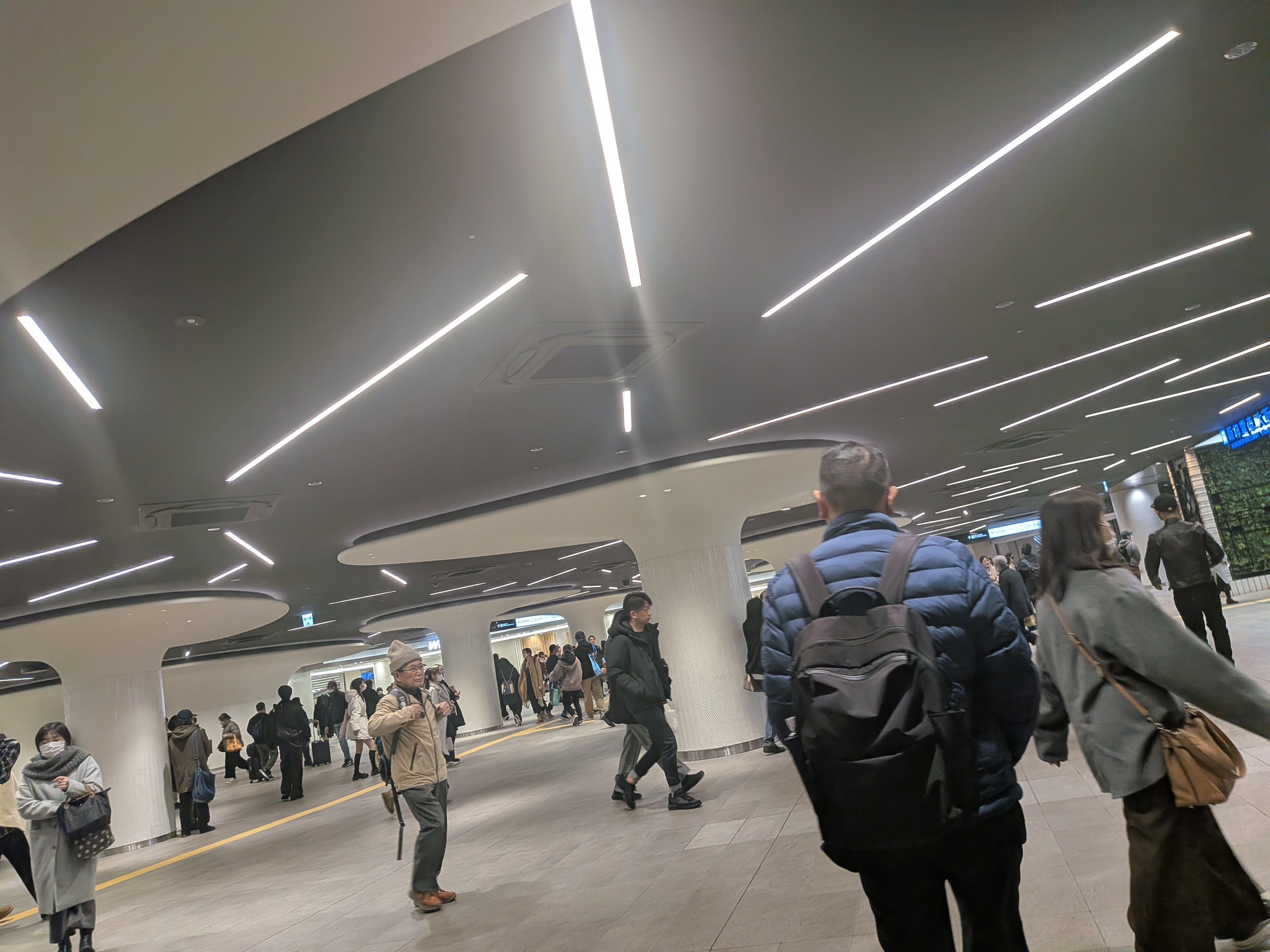
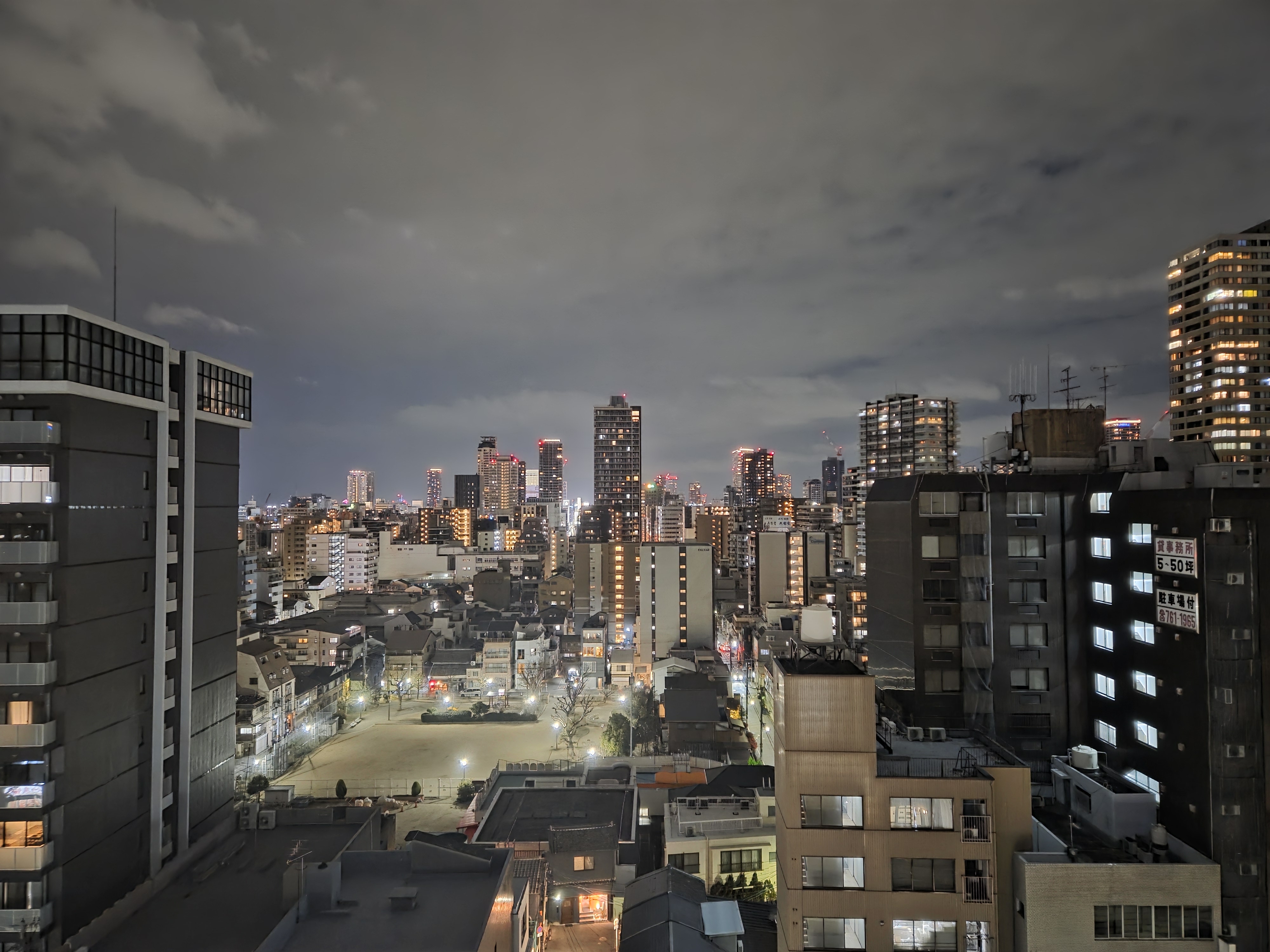
We made it to our little home base on the ninth floor of an apartment building, unloaded our luggage and as always, wandered on a quest to find dinner. Managed to find a mall with some nice places to eat; opted for MORE CONVEYOR BELT SUSHI YES YESSSS. … Needed a sleep after the long travel day. Planned a couple things to see tomorrow, then darkness my old friend.
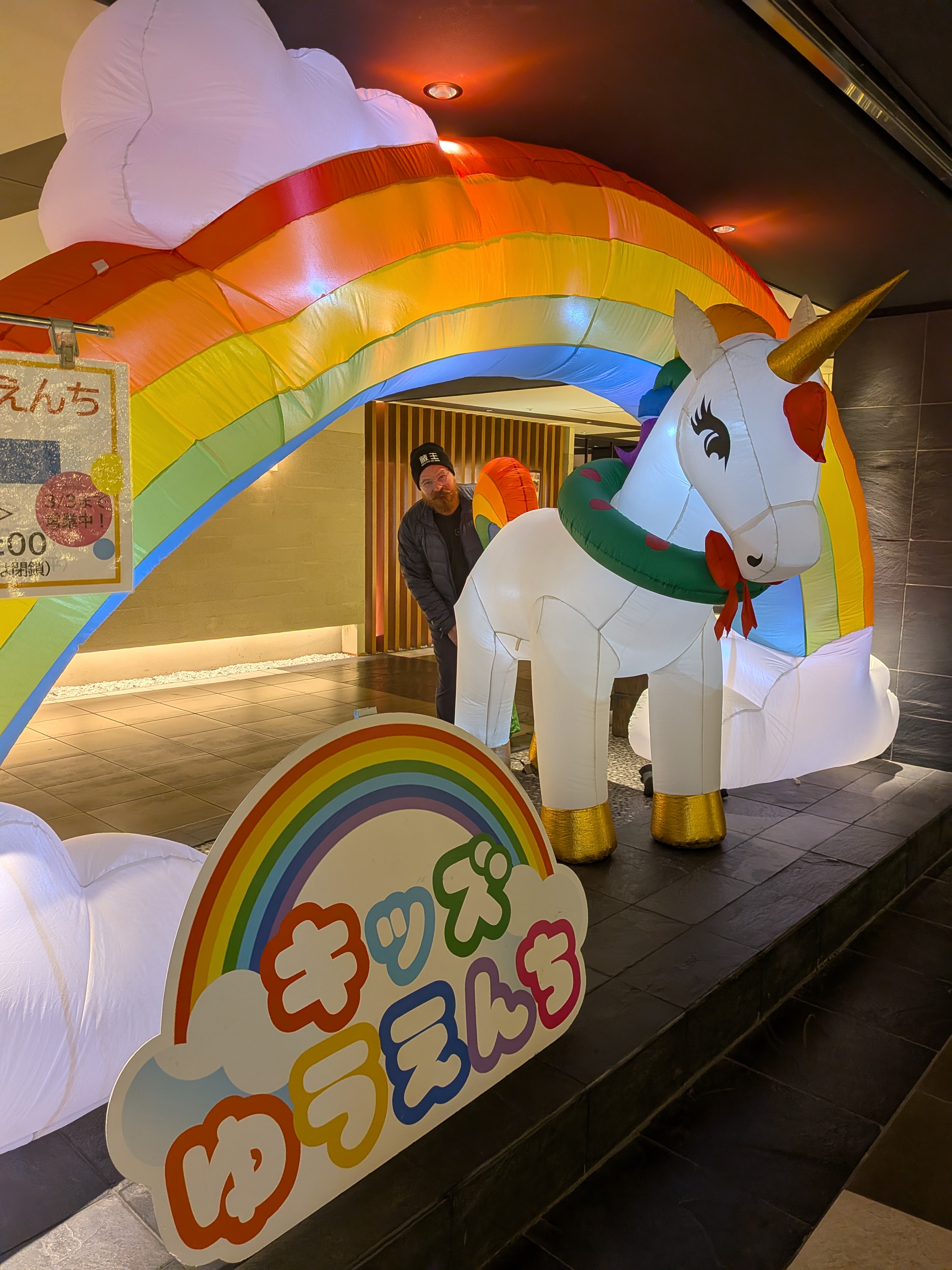
Exploring Kyoto City 京都市
2026-02-17
Originally Heian-kyō (平安京) Kyoto was the seat of the Japanese empire from 794 until 1869. Yep, eleven centuries. Nikki was curious about the number of ghosts. I couldn’t find an exact answer, but safe to assume ten or more. We had been dreading the morning rush hour metro crush, but turned out to be not so bad (I’m sure Tokyo is way worse) getting on the local train to Kyoto from our stop. We must find all the ghosts. So, to begin our census of the ancient spirit population of Kyoto, Nikki set our first destination: Tō-ji 東寺 Temple.
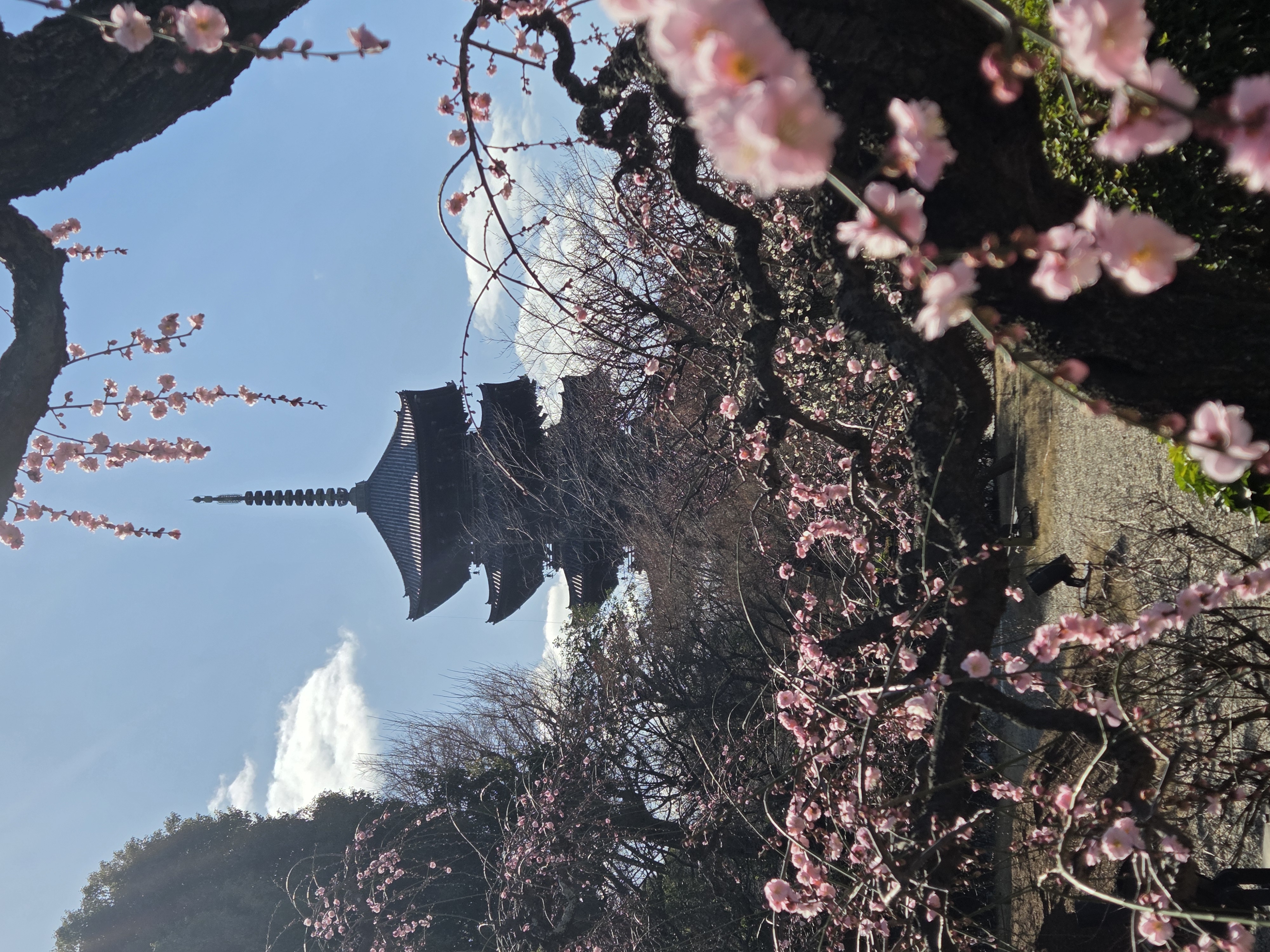
After grabbing a poorly-wrapped burrito (of sorts) to eat, we headed toward the weathered-looking Tō-ji tower—easy to spot over the low contemporary concrete buildings of the city. Through a traditional gate and onto the grounds. So much well-kept gravel. We paid the entrance fee and headed across the mostly dead gardens to the pagoda (found out that’s what it’s called from the visitor’s guide map). Despite it being winter, plum blossoms were starting to pop off around this part of the country, making things feel more like spring (which, it’s February, so that’s a bit early). Any color at all is a sharp contrast to the browns of Colorado this time of year.
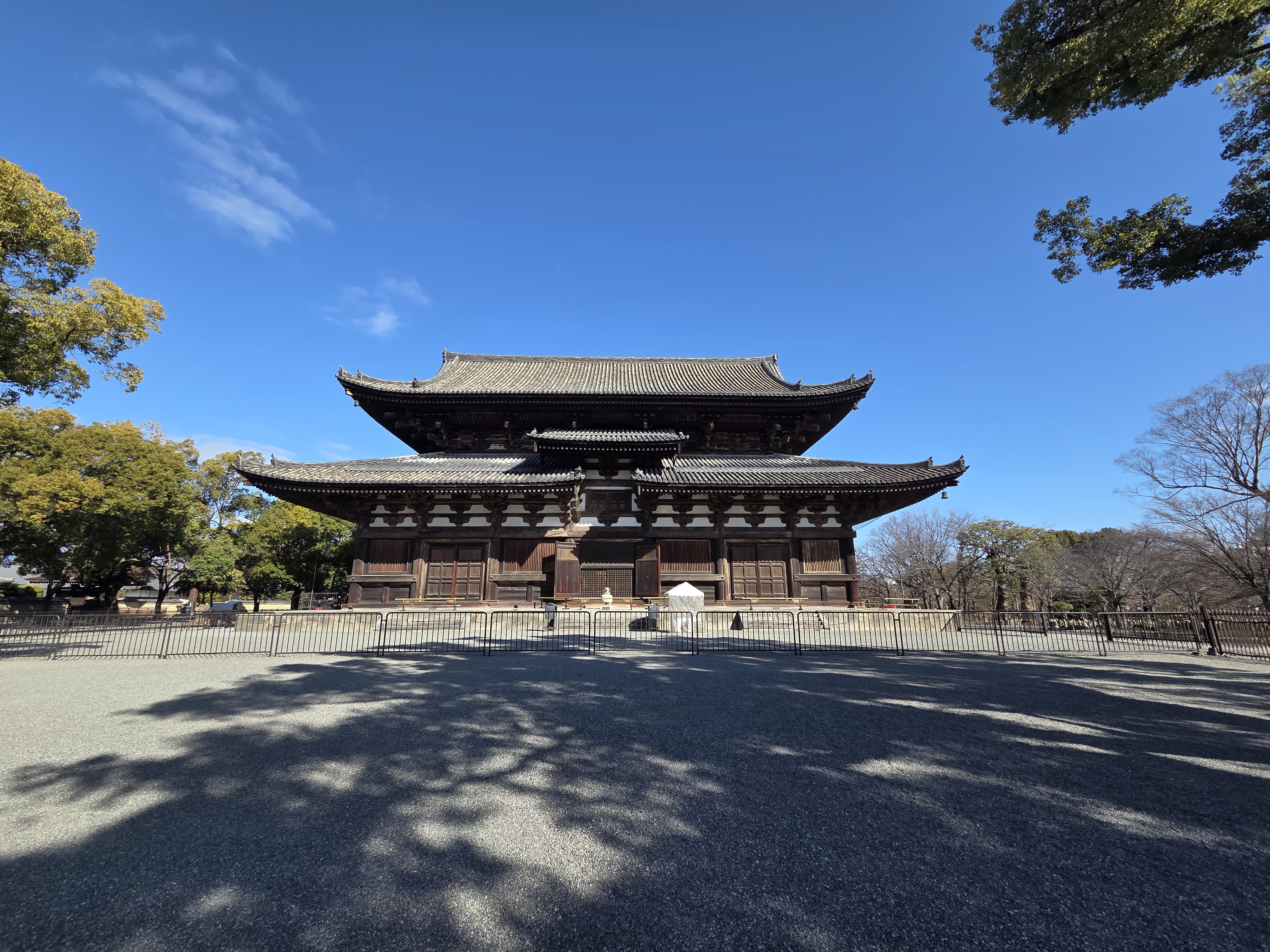
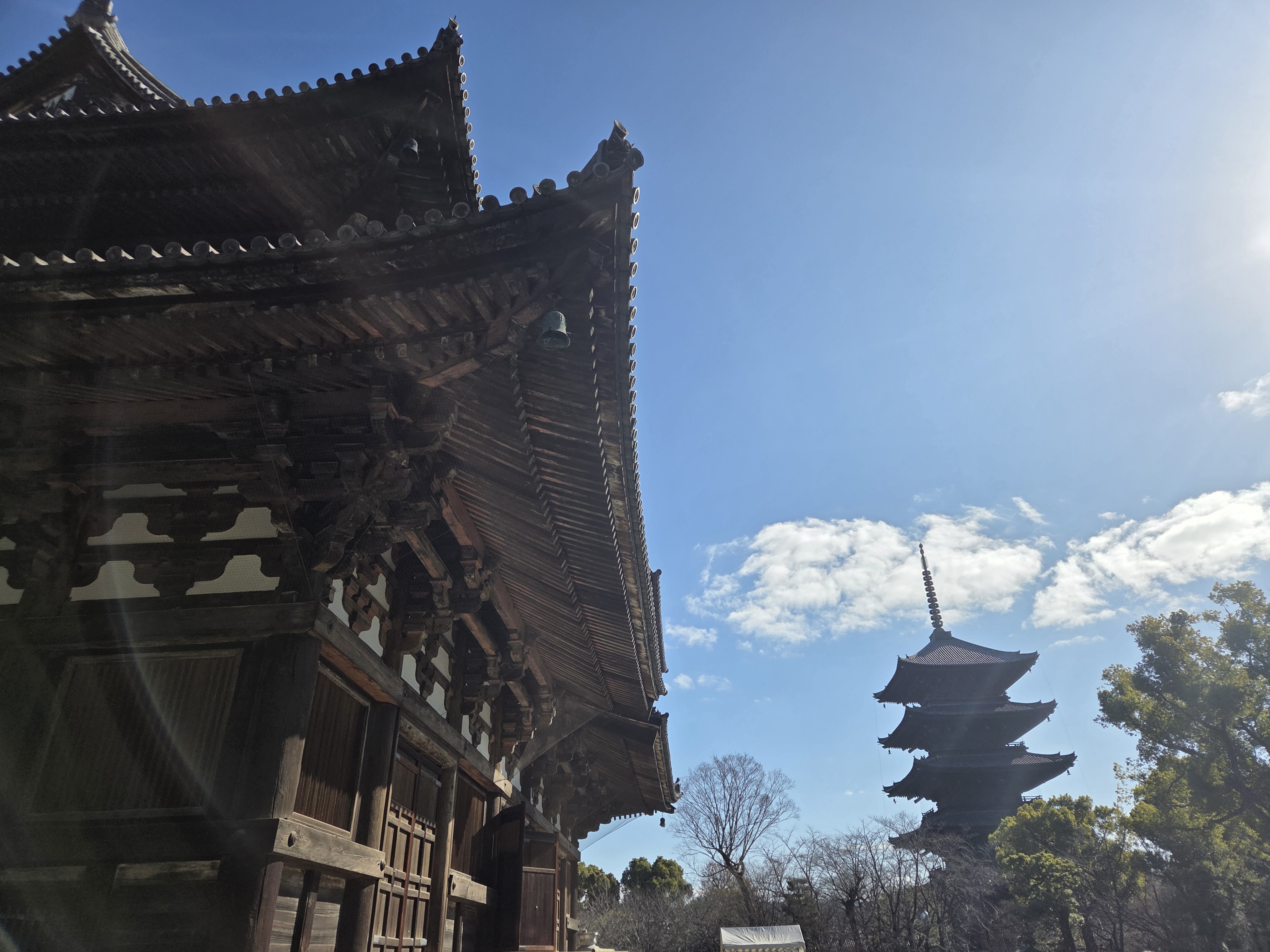
Many of the plants are clearly very old. One very stately cherry tree (Sakura 桜) is a centenarian. Is it all considered bonsai? Do the gardeners understand the legacy they leave behind with their work here? Their deft and careful fingers are visible in the bark of every tree.
The pagoda was built to last: One central column floating on a giant sunken stone foundation, with disjointed levels that can sway independently to prevent collapse during an earthquake. Pretty sophisticated engineering considering its age. The grounding wire running from the spire atop the pagoda into the ground ten or so meters from the was a more recent addition to prevent lightning strikes from burning the structure down (it happened at least once before). Rain chains and upturned corners are such a distinct feature of religious structures in Japan; it’s surreal to be here where it looks so natural.
The lecture hall and kondo both contained impressive statues of the Buddha and his twelve guardian generals. More than one of them were terrifying—certified bad-asses not to be trifled with.
Sad we missed the moon festival or “light the night” event that was going on. With the way all the inert LEDs and ground lighting visible during the day were arranged, I’m sure it was a beautiful experience. Next stop: Kyotō’s Gion 祇園 district.
*Pit stop:
- Katapan-ya Kamei-shōten 亀井商店. GO HERE. They make “katapan”, which is “Kyoto’s original pancake!” (or so the signage says). It’s an over-easy pancake, tri-folded to contain the gooey goodness of the raw batter, and served hot in a paper bag. *disturbing groaning sounds*. The shop is run by a family of three (it seemed), a daughter, mom and dad. Premier pancake powers present here.
- Wasachi tea house beautiful matcha teas and affogato and a clean, contemporary vibe
Gion 祇園
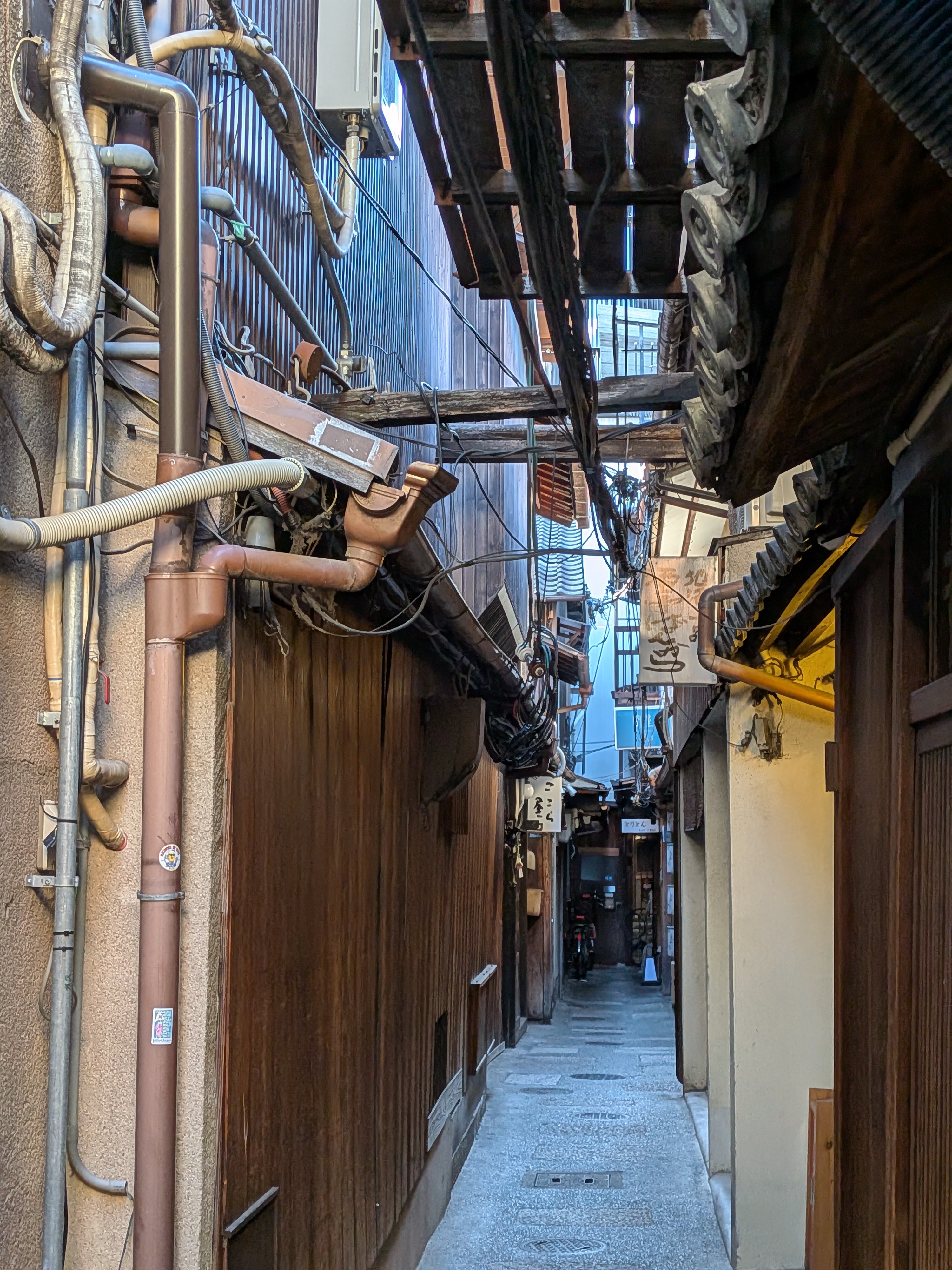
One of Nikki’s favorite novels is Memoirs of a Geisha by Arthur Golden. She was very excited to go see old Kyoto’s most famous Geisha district: Gion. WELL. Turns out, most of the human population on the island of Japan was also very excited. We had to wade through the current of window shopping tourists of every possible nationality. Renting a kimono (着物) or hakama (袴) as historical cosplay or for formal photos in a classy historic setting is very popular. The soul of this place has been carefully preserved: all wooden architecture, narrow streets, vendors and beckoning alleyways; ramen wafting from beneath drapes, hoping to coax out a few ryo to fill a belly. Not hard to imagine it hundreds of years ago. We wished we had come a bit earlier in the day to miss the crowds. At least there were friendly tiny dog owners that let us love on their pekingese ❤️!
Peckish, we made our way to Pontocho Alley for lunch.
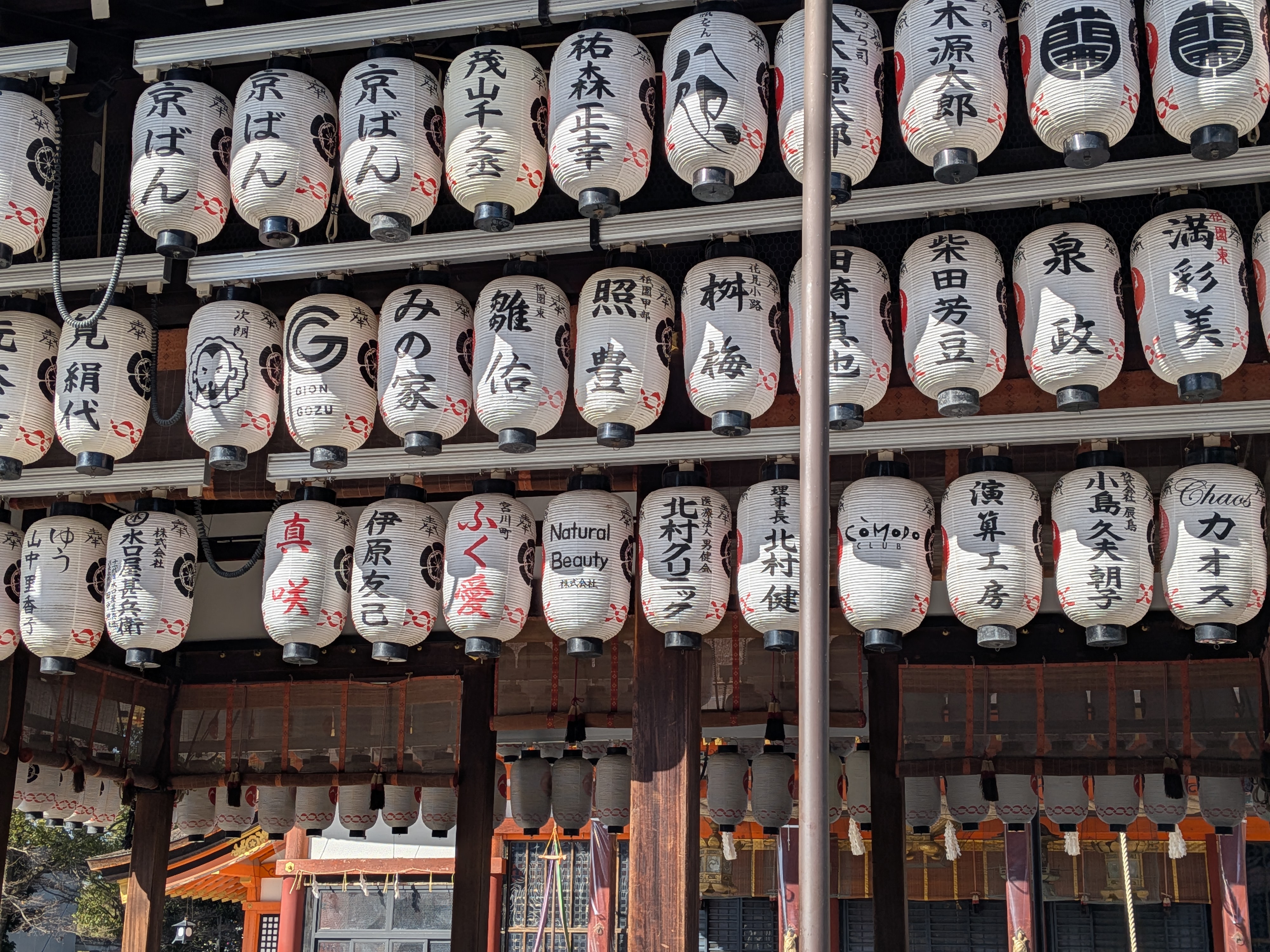
Impressions Caught some folks praying by ringing a large bell. Some laid-back short-tail cats, relishing and ignoring the attention of tourists. Colorful paper tied to string. Paper lanterns and pinwheels turning in the wind. Smoke and oil, spheres of fried octopus. Stalls upon stalls passed by throngs of people upon people. Wrapped food and skewers. Wares and street wear. Quiet alleys between meals, waiting and confident.
As an (former) artist
I am obsessed with the textures of this place. My artistic eye was born and raised with United Statesian (and western European) aesthetics. The only hints I had of what this culture might hold (visually, creatively) for me came from anime and popular movies or media I had been consuming since Pokémon in the 90s. Here, my assumptions were challenged, and I could feel my “visual dictionary” growing inside my head. Surrounded by architecture where every facet and corner was carefully considered by the designer. Each street small and tidy, the controlled chaos of electrical lines overhead. A glyphic language where each character is calligraphic skill and singular beauty—conveying greater meaning when surrounded by its complicated siblings. Wood slats, subway tile walls, paper ribbons, heavy carved stone steps, sacred tassel ropes. The quiet which is necessary to contemplate the essence of each. Together, slices of fabric creating the quilted tapestry of a modern culture that has an ear tuned to the echoes of its past.
Fushimi Inari Taisa 伏見稲荷大社
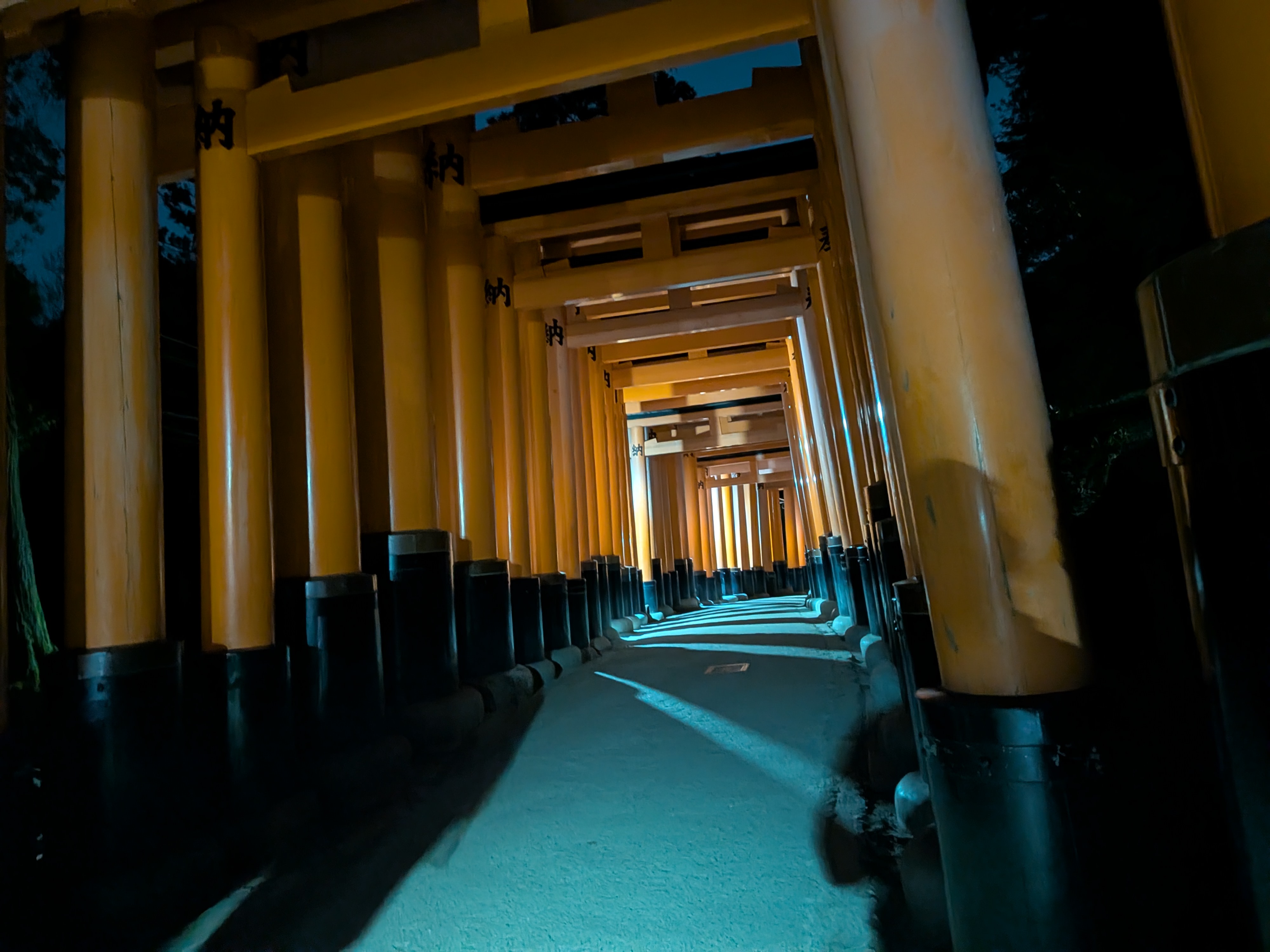
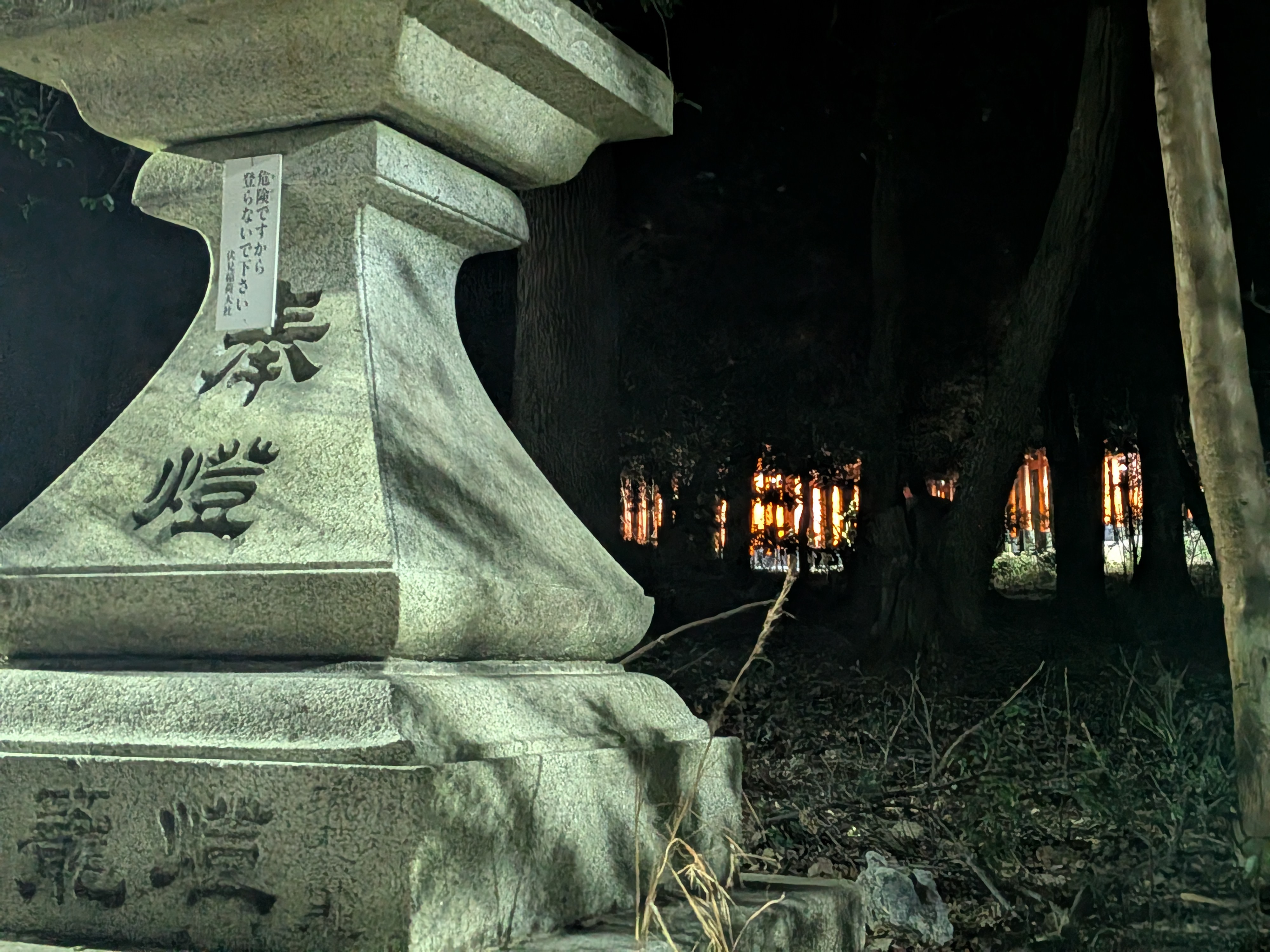
Nikki found this mountain/hill shrine online before we headed to Kyoto, and from reviews decided it was just as cool to see at night. Glad she did, it was impressive and ethereal. As the night got deeper, the bright, up-lit tunnels of hundreds of Torii gates—bright red and iconic in the daytime—turned into spirit portals at night. I’m not convinced that the person in the traditional robe and straw hat I spied taking the steps two at a time away from us wasn’t a mountain spirit late for a spectral appointment, grumbling to themselves about the late night mortal foot traffic.
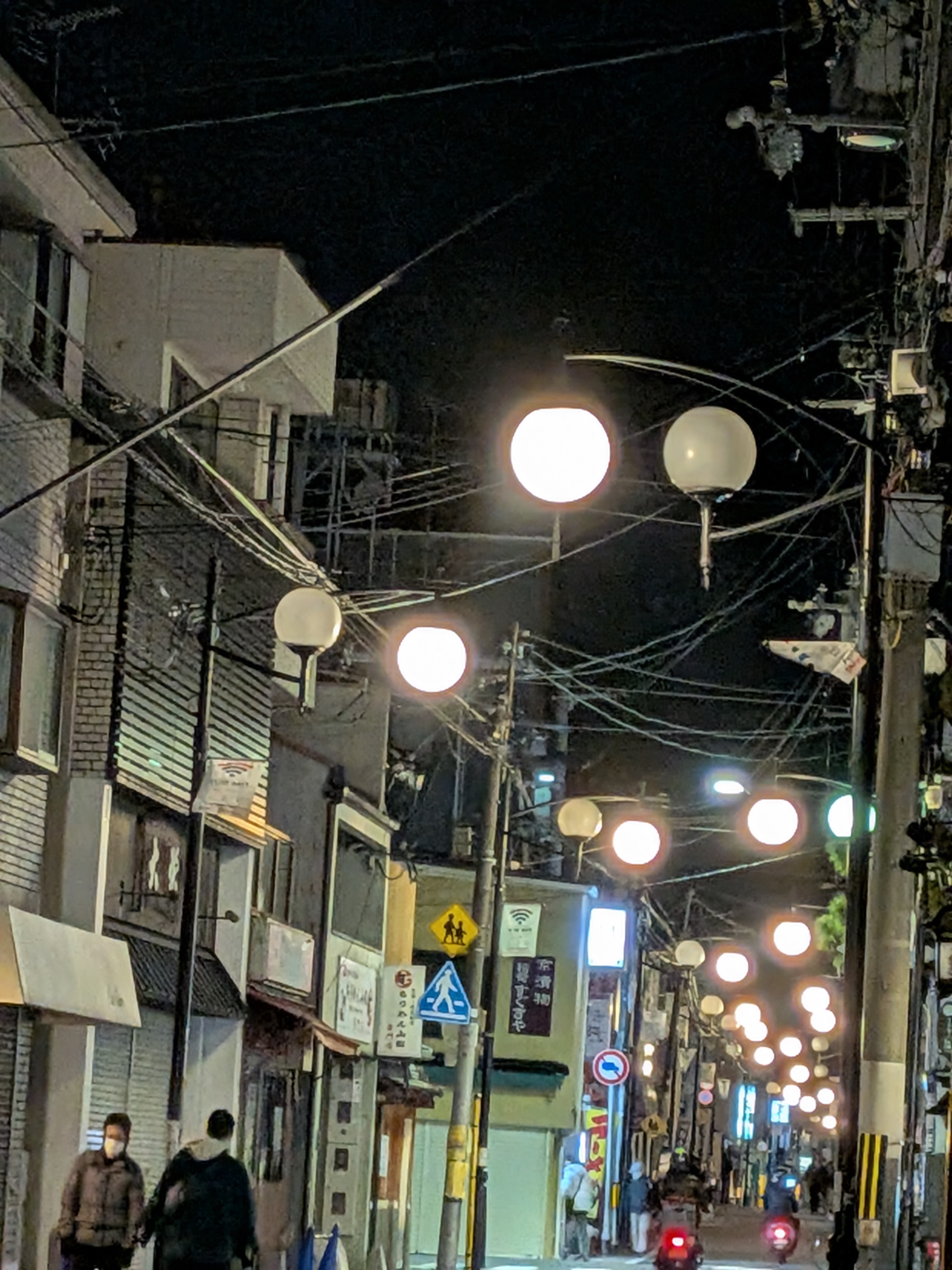
Catch the night train back to our apartment, ready to see the castle that’s been looming over us the past nights.
It would later turn out, katakana (片仮名) was the real cheat-code. Many formerly Japanese words have been replaced colloquially with words from other languages, and katakana are used to represent the noises one has to make to say foreign words using Japanese pronunciation. For example: “clinic” is クリニック, or “koo ree nee koo”.
ク リ ニ ック ku ri ni k-ku The small “tsu” before the last “ku” means to double-up the consonant following it. ↩︎